
The right insert keeps products secure, improves the unboxing experience and makes better use of the available space. This guide explains how materials, fit and structure work together.
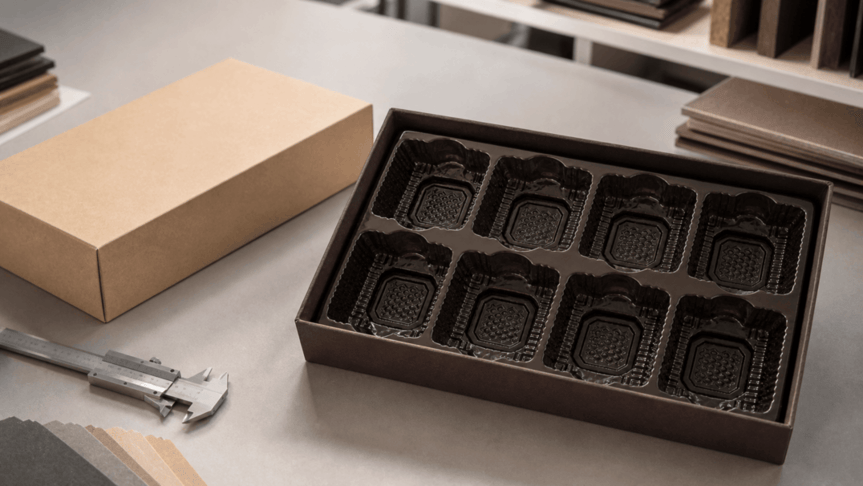
Excerpt: A well-designed insert protects the product, improves presentation and reduces wasted space.
The insert is one of the hardest-working parts of a package. It keeps the product in position, protects it during handling and controls how it is revealed when the box opens.
Yet insert design is often considered late in the project. A box is selected first, artwork is developed, and only then does the team ask how the product will fit inside. This can lead to unnecessary empty space, weak protection or an insert that is difficult to pack.
The right insert begins with accurate product information:
A rigid bottle, a delicate pastry and a jewellery set require very different support. Even products with similar dimensions may need different clearances or fixing points.
The insert should hold the product securely without making it difficult to remove. If the fit is too loose, the product can move during transport. If it is too tight, packing becomes slow and customers may damage the product when taking it out.
Different materials offer different balances of appearance, protection and cost.
Paperboard inserts can be folded into platforms, dividers and compartments. They work well when a clean paper-based presentation and efficient flat packing are priorities.
Moulded fibre inserts can follow the product shape more closely and offer cushioning. They are often chosen when a natural material appearance supports the brand.
Thermoformed trays provide precise cavities and consistent positioning. They are useful for food, cosmetics and products that need a clean, repeatable layout.
Foam or EVA inserts can provide strong cushioning and a premium feel, especially for delicate or high-value products. Their thickness, density and surface treatment should be selected carefully.
No material is automatically the best choice. The correct option depends on the product, sales channel, target appearance, quantity and disposal requirements.
An insert is also part of the opening experience. The spacing around each item, the depth of the cavity and the order in which products are seen all influence presentation.
A good insert can:
The goal is not to fill every millimetre. It is to create enough support while keeping the arrangement calm and intentional.
The insert must work before the package reaches the customer. Ask who will assemble it, how quickly products need to be packed and whether the insert can be delivered flat.
A complex insert may look impressive but require several folding and gluing steps. A simpler design may reduce packing time, storage space and production risk.
The complete pack should also be tested in the position in which it will be stored and shipped. Products can move vertically as well as from side to side, so support at the top may be as important as support underneath.
A physical sample is the fastest way to check fit, removal and presentation. Test the real product—not only a drawing or 3D model—and include any protective bags, labels or accessories used in final packing.
Small adjustments to cavity size, board thickness or finger access can make a major difference to both protection and usability.
Planning a new packaging insert? Share the product dimensions, weight, reference photos and packing requirements with us. We can help you compare suitable structures before the final box moves into production.

Scan to start a chat

Scan to add us