
Retail packaging must withstand stacking, handling and delivery as well as look good on shelf. These five checks help identify weak points before goods leave the factory.
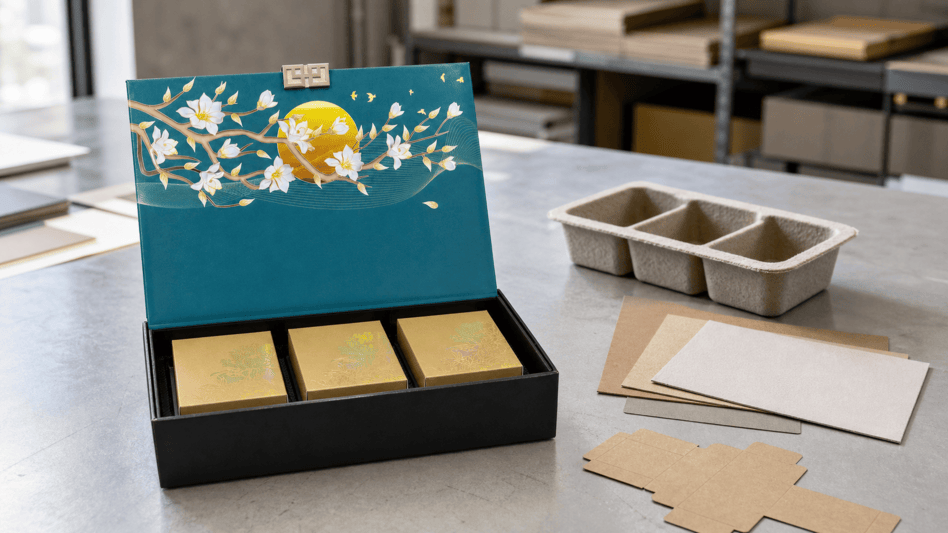
Before reaching the customer, packaging can pass through a warehouse, an export carton, a pallet, a courier network and several changes in temperature or humidity. Each stage creates different risks.
Good packaging design considers the complete journey—not only the first impression.
Start with the sales and distribution method.
A box displayed in a shop has different requirements from one sent directly to a customer. A gift set shipped on a pallet may experience compression, while an e-commerce order may be turned, dropped or placed under other parcels.
Ask:
The answers determine how much protection is needed.
Damage often begins with empty space. If the product can move, repeated impacts can affect both the item and the presentation box.
The insert should support the product at appropriate points and prevent side-to-side and vertical movement. Accessories should not rub against each other, and heavy items should not rest on delicate surfaces.
Protection does not always require more material. A better-positioned support, divider or locking tab may solve the problem with less volume.
Rigid boxes, metallic papers and dark colours can show scuffs, fingerprints and crushed corners. A protective bag, tissue wrap or paper sleeve may be appropriate, but it should be tested for marks or colour transfer.
Handles, knobs, ribbons and raised decorations may need clearance inside the shipping carton. If an outer carton presses directly against them, they can become the first point of failure.
The export or courier carton should fit the presentation box and the chosen protective supports. Too much space allows movement; too little space transfers every impact directly to the retail pack.
Corrugated grade, flute direction and carton dimensions should be selected according to weight, stacking and transport conditions.
For premium boxes, paperboard or moulded-fibre corner supports can create clearance around vulnerable surfaces. The supports should remain in position even if the carton is turned.
Testing should use the final product weight, insert, presentation box and outer carton. An empty box does not behave like a fully packed one.
Practical checks may include:
The required test plan depends on the product and market. The purpose is not to make packaging indestructible, but to understand the likely risks and design for them.
Do not look only for broken products. Check corner compression, surface rubbing, insert movement, drawer alignment, closure strength and marks caused by the protective materials.
Small signs can identify a weak point before it becomes a customer complaint.
Packaging ready for retail is not always ready for delivery. Treat the retail box, insert, protective components and shipping carton as one system.
Planning packaging for e-commerce or export? Tell us the product weight, packing method and shipping route. We can help review the structure before mass production begins.

Scan to start a chat

Scan to add us