
Box structure, materials, printing, finishing and packing time can affect the final cost more than size alone. Understand the main cost drivers before confirming a packaging specification.
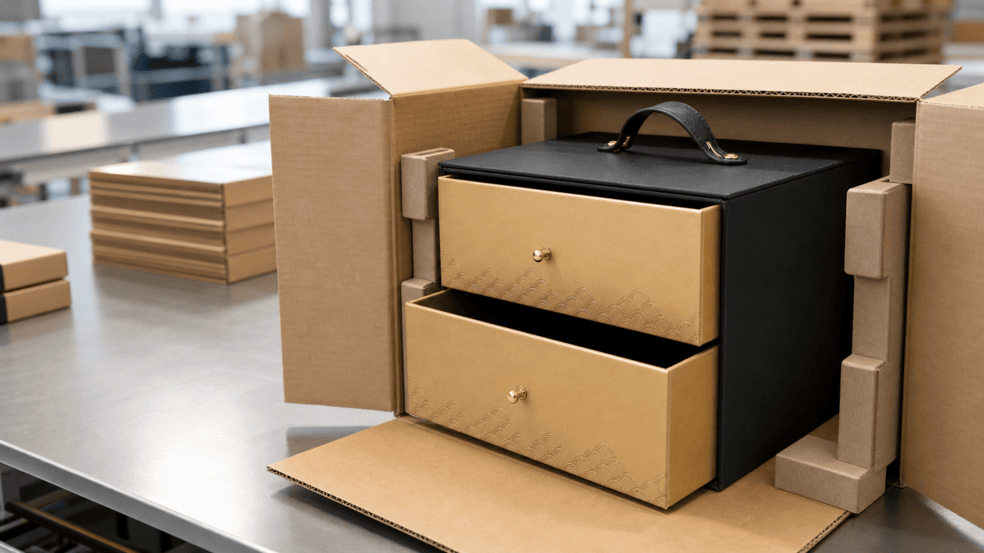
Size matters, but it is only one part of the calculation. Two boxes with similar dimensions can have very different costs because of the way they are constructed, printed, finished, assembled and shipped.
Understanding the main cost drivers makes it easier to protect the parts of the design that matter most.
Every additional component requires material, tooling and handling. A simple lid-and-base box may use fewer parts than a hinged box with magnets, ribbons and a separate insert.
Complex structures can also require more hand assembly. This is especially important for rigid boxes, drawer boxes and presentation sets with several compartments.
Before adding a feature, ask what it contributes. Does it improve protection, create a useful opening experience or support the brand? If the answer is unclear, simplifying the structure may improve both cost and reliability.
Board thickness, covering paper, corrugated flute and insert material all influence the quotation.
A heavier material may provide better stiffness, but it can also increase weight and transport cost. A special textured paper may look distinctive, while requiring additional purchasing time or a higher minimum quantity.
The most economical material is not always the thinnest one. A material that performs poorly may cause warping, cracking or product damage. The better approach is to use the lightest specification that still performs reliably.
Foil stamping, embossing, spot UV, lamination and special coatings are not simply decorative choices. Each process adds setup, registration and production time.
Finishes may also interact. For example, a textured paper can affect foil definition, while a heavily printed surface may need protection against scuffing.
One well-chosen finish often creates more impact than several effects competing on the same surface. Concentrating the budget on a logo, opening detail or key panel can produce a cleaner result.
Packaging cost continues after the boxes arrive.
A flat-packed carton may save transport and storage space, but it must be assembled. A rigid box may arrive ready to pack, but occupy more warehouse volume. An insert with many tabs may reduce material use while slowing the packing line.
Ask the people who will pack the product to review the sample. A few seconds added to every unit can become significant across a large order.
Printing plates, dies, moulds and machine setup are shared across the production run. At lower quantities, these fixed costs are divided across fewer units. At higher quantities, the unit cost may fall, but inventory and storage requirements increase.
Ordering more is not automatically more economical if the extra packaging will remain unused or the design may change.
The quoted unit price is only part of the final landed cost. Assembled rigid boxes take up more volume than flat cartons. Unnecessarily large inserts increase the size of both the presentation box and the export carton.
Right-sizing the package can reduce material, shipping volume and storage space at the same time.
If a quotation is above budget, avoid reducing every specification at once. First identify the non-negotiable parts of the experience.
Possible adjustments include:
The best cost reduction is one the customer does not notice.
Need to bring a packaging concept closer to budget? Share the product, quantity, target cost and reference design with us. We can identify which changes are likely to make the greatest difference.

Scan to start a chat

Scan to add us